
Broward County 72-Hour Release Window
BSO has no distinct control labeled "72-hour release." Its Inmate Release Log returns one selected calendar date at a time. A three-day view is therefore a method, not a separate sheriff product. Retrieve three dates when the interval aligns with full days. Retrieve four when the start and end fall partway through the first and last calendar dates.
After collecting those pages, filter by the actual Released date and time. Do not count every record on all pages automatically. An event before the cutoff is outside the window, while an event after the end belongs to a later check. This exact-time method is more reliable than assuming "three dates" always equals 72 hours.
The BSO release-log selector makes the calendar-date design clear.
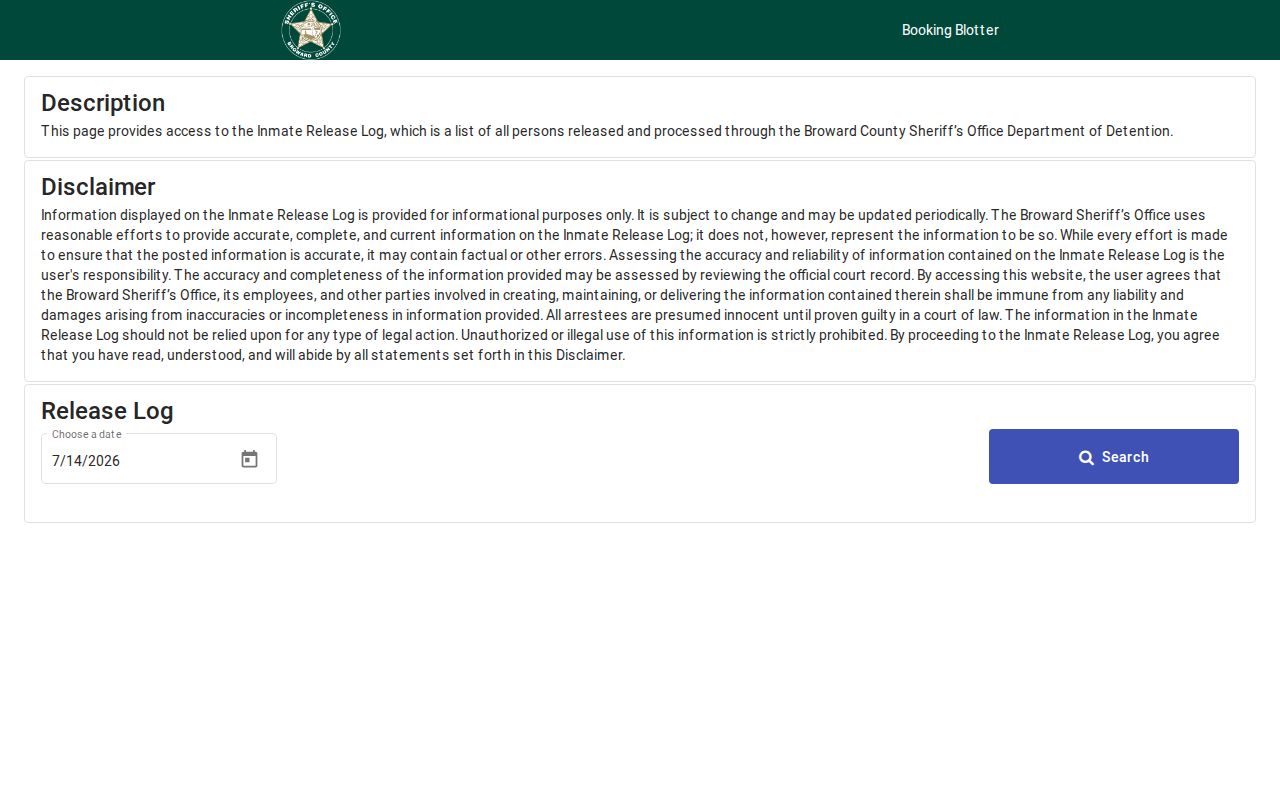
The screen supplies the source dates, while the displayed timestamps define the final rolling interval.
Build Broward County 72-Hour Releases
Choose an end time before collecting records. That keeps the three-day check stable and prevents a moving present time from changing the cutoff as each date loads. Keep the sheriff's labels unchanged. The JMS number, birth details, agency, and case data help separate names and distinct arrests.
- Set the 72-hour start and end, including the time of day.
- Open each BSO calendar date touched by that interval.
- Copy only records whose Released timestamp falls within the boundaries.
- Remove duplicates by JMS number, release timestamp, and booking episode.
- Read Release Reason before deciding whether the event was a community exit or transfer.
- Check the Clerk docket or receiving custody system when the reason points beyond BSO.
The same-day Broward Jail Releases: 24 Hours view is a better fit when the expected event is recent and the cutoff is known. The three-day method serves a different need: it catches an uncertain date, an overnight boundary, or a delayed review after several days away from the log.
Note: Save the retrieval date with the results because BSO warns that its information may change and is updated periodically.
Broward County 72-Hour Release Fields
The daily log gives enough detail to make a defensible multi-date set. Its key value is not just the person's name. Admission and release times define the custody episode. Release Reason distinguishes a likely community exit from a transfer. Charge and warrant or case details connect the jail event to the Broward Clerk record.
| Field | Use in a 72-hour check |
|---|---|
| JMS number and BCCN | Separate booking records and reduce mistaken identity. |
| Name and demographic fields | Confirm the correct person with more than a name. |
| Admitted and arrested time | Place the exit within the larger custody timeline. |
| Released date and time | Apply the exact start and end cutoffs. |
| Release Reason | Distinguish bond, pretrial release, time served, and transfer. |
| Agency, charge, and case data | Identify the arrest source and reach the corresponding court matter. |
The approved BSO result capture shows these release fields in context.
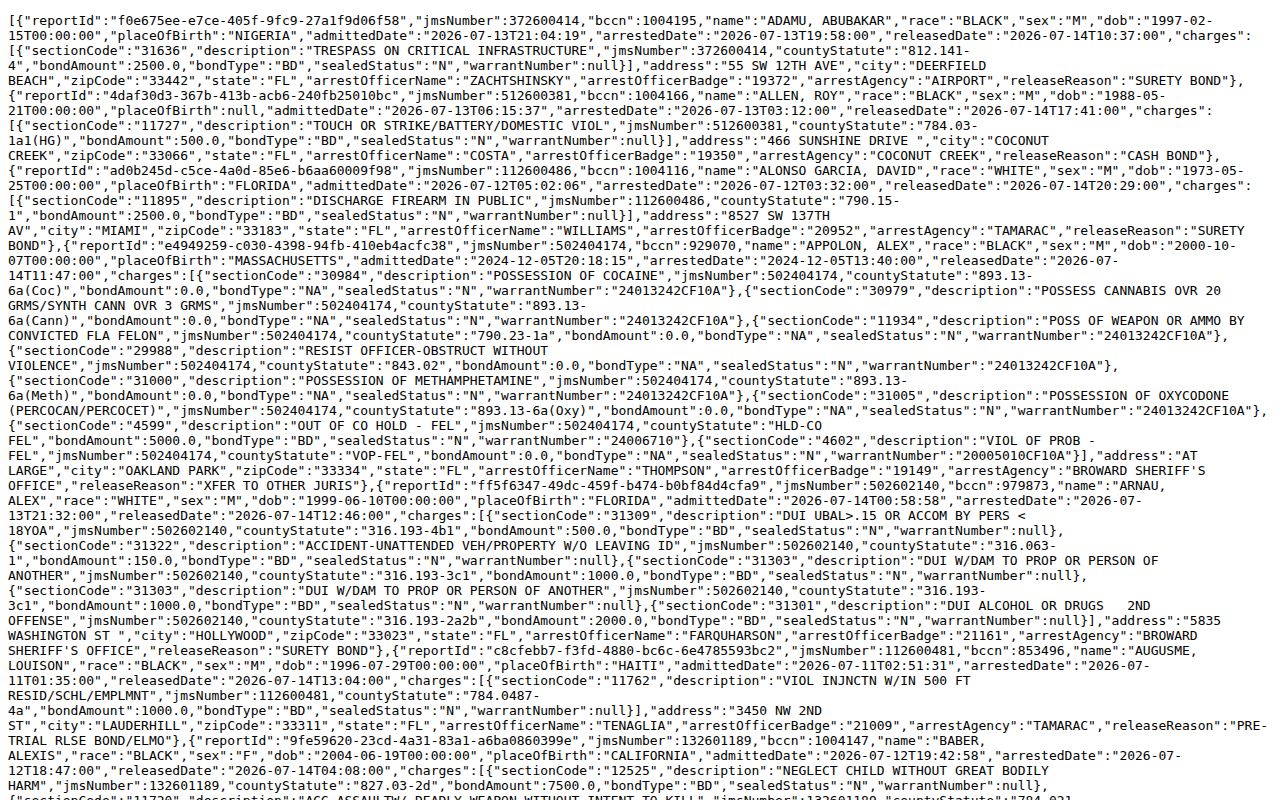
The displayed record has no booking-photo field, so a photo should never be assumed to accompany the three-day list.
Broward County Weekend Release Review
A 72-hour search often spans a weekend, but BSO does not label weekend releases as a separate category. Each exit is still assigned its own timestamp and reason. The safe method is to select all calendar dates crossed by the period. A Friday-to-Monday check may require four source dates when the exact start and end times fall on both boundary days.
Release processing can continue outside ordinary records-office access. That does not create a promised gate schedule. Court orders, bond processing, holds, simultaneous intake work, and state or national database availability can affect the point when an eligible release is completed. The public log may also be updated after the event.
For a weekend boundary, record both the source date and the displayed release time before merging entries. This preserves the distinction between an event that occurred during the selected period and a correction that appeared later. BSO publishes the event time, but it does not promise when every correction will reach the public view.
The BSO detention FAQ describes the county's four-facility detention system and processing context.
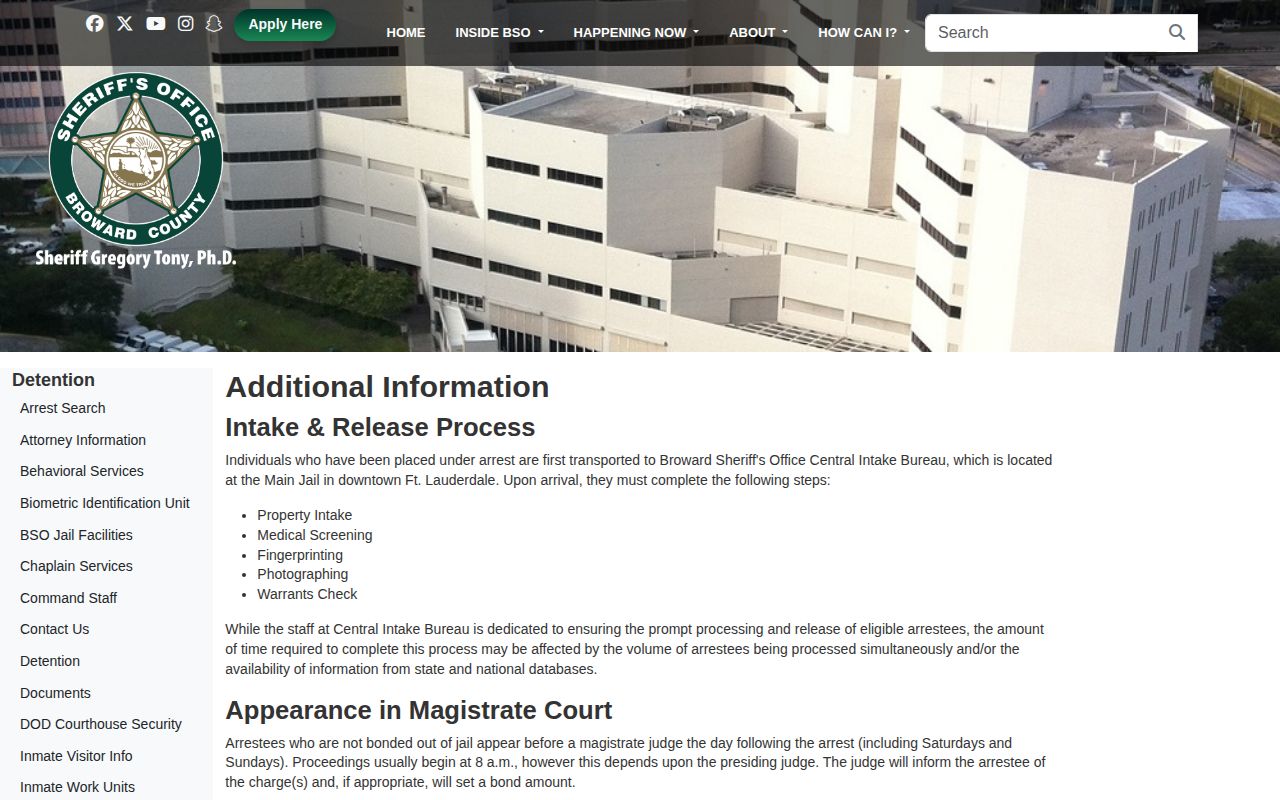
Because all four county facilities share the BSO release process, the multi-date log is systemwide rather than facility-specific.
Broward Release Feed Date Quirk
The one-date selector is Broward's defining recent-release quirk. It should not be advertised as an official rolling 24-hour or 72-hour feed. The older branded release-log host was returning an error during research, although the current booking-data application and live BSO data route still worked. Use the current application rather than an old bookmark.
This setup makes method notes essential. Preserve every exact timestamp, identify all boundary dates, and state when the set was retrieved. BSO publishes no guaranteed minute cadence and no fixed online retention term on the form. If a date is missing online, that does not establish that the agency lacks the underlying record.
For an old or disputed event, submit a BSO public-record request for the booking and release sheet. Include the name, birth date if known, JMS or arrest number, facility, approximate dates, and requested document. The Broward Clerk can provide the court docket or certified disposition. VINELink can alert on a future custody change, but it is not the certified historical release record.
A records request should describe one custody episode rather than ask an agency to guess which person or date is meant. The JMS number is the best Broward jail key. Add the arrest number, case or warrant identifier, and admission date when they are known. Ask BSO for the operational release document. Ask the Clerk for a court order or certified docket. Those sources answer related but different questions.
If a transfer appears near the edge of the three-day span, follow it immediately in the receiving system. A state transfer moves the search to FDC's inmate-population records. A later state discharge belongs in FDC's release records. Federal and ICE paths are separate. This sequence avoids treating a BSO exit as the end of every form of custody.
Note: The Booking Blotter permits a short arrest-date range and warns of lag, but it lists intake activity rather than completed releases.
Interpret Broward County Release Reasons
Every entry in the combined window is an exit from BSO custody. Not every exit is freedom from all custody. A surety bond or pretrial release generally points to community release while the court case continues. A time-served label should be compared with the judgment and sentence. "XFER TO OTHER JURIS" means another authority may now hold the person.
| Release result | Where to verify next |
|---|---|
| Bond or monitored pretrial release | Broward Clerk docket for conditions and later case events. |
| Transfer to FDC | FDC inmate-population search for continuing state custody. |
| Federal transfer | BOP locator, federal docket, or U.S. Marshals channel. |
| Immigration transfer | ICE detainee locator and official ICE contact route. |
For one person's complete sequence, use the Broward County released inmate lookup and match the jail event to court and receiving-system records. If a recent release is not yet visible, recheck adjoining dates. The BSO detention information desk at (954) 831-5900 can address current location questions; a formal records request is the better route for an enduring document.
The current BSO Arrest Search can help establish that a person remains confined and can supply the arrest or JMS identifier. Once the person no longer appears there, move to the release log. Absence is only a cue to keep checking. It cannot distinguish a completed community exit, transfer, correction, or data mismatch. That is why the exact Release Reason carries more weight than roster disappearance.
Use FDC's dedicated release search only for a state-prison release. The general FDC menu separates the prison population, historical releases, supervised population, and absconder records. A person can be out of prison yet remain under supervision, or can leave BSO and enter FDC custody. Those categories should remain distinct across the entire 72-hour review.